
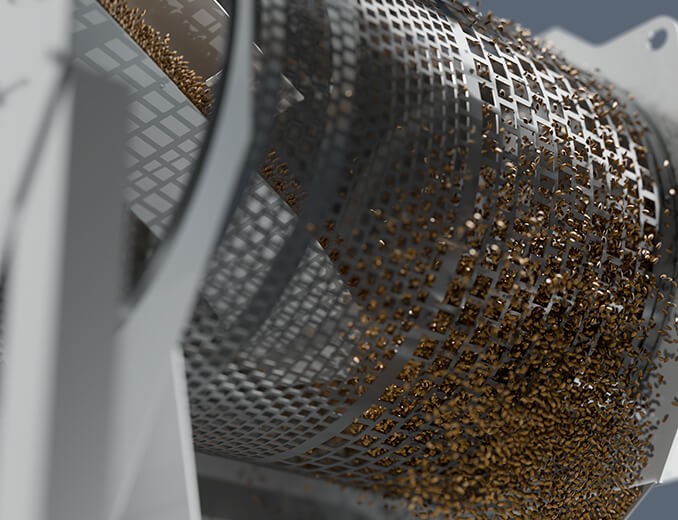
Producing high-quality livestock feed requires a series of carefully designed equipment to ensure efficiency, product safety, and consistency in nutritional content. The production process begins with raw material cleaning, which forms the basis for hygienic feed. Proper cleaning of grains, corn, soybean meal, and other ingredients is essential to maintain feed quality, extend equipment service life, and prevent abnormal damage. Modern feed production facilities use a combination of mechanical sieves, magnetic separators, aspirators, and other cleaning devices to remove impurities, dust, and foreign materials. This initial stage is crucial for creating a stable and safe foundation for subsequent feed processing stages.
Core Equipment in Feed Production
After raw materials are cleaned, they undergo multiple stages of processing through specialized equipment. Grinding machines reduce particle size, making nutrients more accessible to animals and improving digestibility. Mixers ensure even distribution of vitamins, minerals, and other additives, which is critical for balanced nutrition in livestock feed. Pelleting machines compress the mixed ingredients into uniform pellets that resist breaking during handling and storage, while extrusion equipment can produce high-density feed with enhanced texture and nutrient retention. Cooling systems then reduce pellet temperature to prevent spoilage and maintain feed quality over time, while conveying systems transfer materials efficiently between different stages. Automation in these processes allows for consistent production while reducing labor intensity and errors.
Enhancing Efficiency and Sustainability
In modern feed production, efficiency and sustainability are key concerns. Implementing advanced solutions such as automated control systems, energy-efficient motors, and precision temperature control helps manufacturers reduce energy consumption, minimize material waste, and optimize operational output. These technologies allow producers to track production parameters in real time, adjust processing conditions quickly, and ensure the final feed meets industry standards. Proper maintenance of machinery extends equipment lifespan, reduces downtime, and contributes to more sustainable feed production practices. By integrating these technologies, producers can deliver consistent, high-quality livestock feed while meeting environmental guidelines and reducing operational costs.
Global Expertise and Project Management
FAMSUN has established five major production bases and three overseas R&D centers, employing thousands of skilled professionals across the globe. Their experience in over 11,000 projects spanning 140 countries reflects their capability to manage full life-cycle projects, from design and engineering to installation, commissioning, and post-sale support. With dedicated project management teams and hundreds of installation crews, they provide end-to-end solutions that support clients in the food, livestock, and dairy sectors. Their equipment and solutions improve operational efficiency, reduce costs, and promote environmentally responsible production practices. By combining advanced feed production technology with comprehensive project management, FAMSUN demonstrates the value of innovation in delivering safe, nutritious, and sustainable livestock feed worldwide, making them a trusted partner for global feed production projects.
